CEREC 3D same-day restorations
Chairside Economical Restoration of Esthetic Ceramics — diagnosis to a finished, bonded ceramic restoration inside a single appointment.
Woolbert Dental in Shreveport offers CEREC same-day crowns — a custom-designed, permanently bonded ceramic crown created and placed in a single appointment with no impressions, no temporaries, and no second visit. Dr. Michael Woolbert uses CAD/CAM technology to digitally scan your tooth, design the restoration on-screen, and mill a precision-fit crown chairside while you wait. Schedule your CEREC consultation or call 318-868-8276.
What is CEREC?
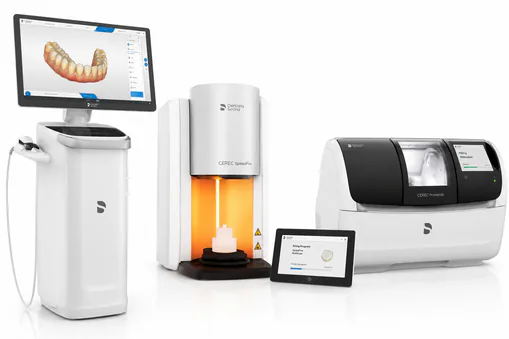
CEREC crowns, also known as Chairside Economical Restoration of Esthetic Ceramics, is a cutting-edge dental technology that allows dentists to create and place custom-designed ceramic crowns in just one visit. This revolutionary system uses computer-aided design and manufacturing (CAD/CAM) technology to create a 3D image of the damaged tooth, which is then used to mill a perfectly-fitted ceramic crown right in the dentist’s office. CEREC crowns are strong, durable, and designed to match the natural color and shape of your teeth, making them an ideal choice for restoring damaged or decayed teeth. With CEREC, patients can enjoy a fast, comfortable, and convenient dental restoration experience that delivers outstanding results.
Dr. Michael Woolbert uses CEREC where it offers a clear advantage: single crowns, inlays, onlays, and veneers that can be completed in one appointment without impressions or temporaries. The digital scan is more accurate than traditional impressions, and the milled ceramic (typically e.max or zirconia) matches the strength and aesthetics of lab-fabricated restorations. For complex cases involving multiple teeth, we may still use a dental laboratory for optimal results.
Reviewed by Dr. Michael Woolbert · Woolbert Dental, Shreveport
Transcript
The Advantages of CEREC Same-Day Dentistry
Benefits of CEREC Same-Day Crowns
CEREC technology eliminates the wait and inconvenience of traditional crown procedures:
Same-Day Results
Your custom crown is designed, milled, and placed in a single appointment — no temporary crown, no second visit.
No Messy Impressions
CEREC uses digital 3D scanning instead of traditional putty impressions, making the process faster and more comfortable.
Precise Digital Fit
Computer-aided design ensures your restoration fits precisely, reducing the need for adjustments and improving long-term comfort.
Durable Ceramic Material
CEREC restorations are made from high-quality ceramic that matches the strength and appearance of natural teeth.
Natural-Looking Results
The ceramic material is color-matched to blend seamlessly with your surrounding teeth for a natural, beautiful appearance.
Frequently Asked Questions About CEREC Crowns
Yes, CEREC restorations are made from high-quality ceramic material that is both strong and durable, making them a reliable and long-lasting choice for dental restorations.
The cost of CEREC restorations can vary depending on a range of factors, including the complexity of the restoration and the location of the dental office. However, in many cases, CEREC can be more cost-effective than traditional restorations due to the elimination of multiple dental appointments.
CEREC restorations are designed to be durable and long-lasting. With proper care and maintenance, they can last for many years.
No, the CEREC process is typically painless and minimally invasive. Your dentist will use local anesthesia to ensure your comfort during the procedure.
CEREC restorations are considered safe and effective. However, as with any dental procedure, there is a small risk of complications, such as sensitivity or discomfort.
Dental insurance plans typically offer similar coverage for both same-day crowns and traditional crowns. However, the percentage of coverage can vary between plans and usually ranges from 50% to 80%. To determine your specific benefits, it is best to consult with your dental team. They can provide you with a detailed explanation of your insurance plan, file a pre-authorization for the procedure, and give you a more accurate estimate of your final out-of-pocket cost.
Yes. At our Shreveport dental office we offer CEREC crowns to patients in Shreveport and the surrounding area. Contact our office today to schedule an appointment.
Common Concerns About CEREC Crowns
"Are same-day crowns as strong as lab-made crowns?"
Yes. CEREC crowns are milled from solid blocks of high-quality ceramic (e.max lithium disilicate or zirconia) — the same materials used by dental laboratories. Studies show comparable strength and longevity to lab-fabricated restorations. The digital design process actually allows for more precise fit than traditional impressions in many cases.
"How long does the appointment take?"
A typical CEREC crown appointment takes about 90 minutes to 2 hours — including preparation, digital scanning, crown design, milling, and bonding. This replaces the traditional 2-visit process (which spans 2–3 weeks with a temporary crown in between).
"Will the crown match my other teeth?"
Yes. Dr. Michael Woolbert shade-matches the ceramic block to your surrounding teeth before milling begins. The ceramic material is translucent and layered to mimic natural tooth structure. After bonding, CEREC crowns are virtually indistinguishable from your natural teeth.
Risks and Considerations
- CEREC crowns require adequate remaining tooth structure — severely damaged teeth may need a post-and-core buildup first
- As with any crown, the prepared tooth may experience temporary sensitivity to hot and cold for 1–2 weeks
- In rare cases, a CEREC crown may need to be remade if the fit or aesthetics do not meet standards during the same appointment
- Complex multi-tooth restorations or full-mouth cases may still benefit from lab-fabricated restorations for optimal results
Medical Disclaimer
This content is for informational purposes only and does not constitute dental or medical advice, diagnosis, or treatment. CEREC crowns are one restorative option and may not be appropriate for all cases. Tooth preparation is irreversible. Temporary sensitivity after crown placement is normal. Consult Dr. Michael Woolbert or a qualified dental professional regarding your specific restorative needs. Individual results may vary.
Before, during and after your cerec 3d same-day restorations appointment
One visit, start to finish — the optical impression, the milling and the bonding all happen while you are in the chair.
How to prepare
- Examination and x-rays to confirm the tooth can carry a ceramic restoration and whether it needs root canal therapy first.
- Shade is matched against your own teeth before the tooth is prepared.
- Allow about an hour in the chair — the point of CEREC is that you finish in one sitting.
- Nitrous oxide is available if a longer single appointment would be easier for you that way.
How it is carried out
- The damaged tooth is prepared with a thin layer of reflective powder applied directly on the tooth's surface.
- A special camera takes an optical impression of the tooth, which is transferred to the computer and displayed on a colour screen.
- The doctor uses CAD technology to design the restoration.
- The CAM mills the restoration out of a solid block of ceramic material using a high-speed diamond bur and a disk.
- The dentist bonds the new restoration to the surface of the old tooth. The whole process takes approximately one hour.
Afterwards, and long term
- Mild sensitivity to temperature for a few days is normal after any bonded ceramic restoration.
- If the bite feels high or uneven once the anaesthetic wears off, come back and we will adjust it.
- There is no temporary to look after and no second appointment to attend.
- Clean it as you would a natural tooth — the ceramic does not decay, but the tooth margin underneath it can.
What we use, and why it matters to the result
CAD/CAM, an optical impression camera and a solid ceramic block are what make a one-visit restoration possible at all.
CAD/CAM
Computer Aided Design and Computer Aided Manufacturing — a camera, a computer and a milling machine in one instrument.
Optical impression camera
Takes a digital impression of the prepared tooth, displayed on a colour screen, instead of a tray of impression material.
Solid ceramic blocks
High-quality, durable ceramic that matches your natural tooth colour, milled to shape rather than layered.
High-speed diamond bur and disk
The cutting tools inside the milling unit that shape the restoration from the block.
Adhesive bonding
The finished restoration is bonded to the surface of the tooth, which is part of why so little original tooth structure has to be removed.
Digital imaging
Immediate, low-radiation images used alongside the optical scan to confirm the tooth is sound underneath.