Skip to content

Tooth Colored Fillings

Tooth Colored Fillings

Natural looking dental restorations

Tooth colored dental fillings, also known as composite fillings, are a popular alternative to traditional metal amalgam fillings. Made of a mixture of resin and finely ground glass-like particles, these tooth-colored fillings offer a more natural appearance and can blend seamlessly with the surrounding teeth. Tooth colored fillings are often used to restore decayed, chipped, or cracked teeth, as well as to replace old metal fillings for aesthetic reasons. With their durable and long-lasting properties, tooth colored fillings have become a popular choice for many individuals seeking a discreet and effective way to restore their teeth.
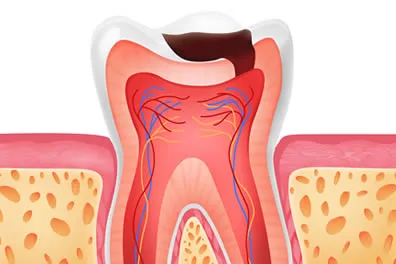
tooth cavity illustration

What is a cavity?

Cavities are a common dental issue that refers to the presence of holes in teeth, caused by decay. Typically, the surrounding area of the cavity will appear dark brown or gray. Bacteria in your mouth, found in plaque, are the main culprits of cavities. These bacteria interact with carbohydrates and sugars in your food, creating an acidic environment that dissolves the protective enamel on the outer layer of your tooth. Once the enamel is compromised, the softer dentin layer is exposed, leading to the formation of a cavity. If left untreated, the decay process will quickly progress and spread deeper into the tooth. It’s essential to maintain good oral hygiene, such as brushing and flossing regularly and avoiding sugary foods, to prevent cavities and other dental problems.

What are composite fillings?

Composite fillings are a popular choice for those seeking a dental restoration that blends seamlessly with their natural teeth. These fillings are made of a combination of plastic and glass particles, providing a durable and aesthetically pleasing solution. After the decay has been removed, a cleansing gel is applied, followed by a bonding solution and the composite material. To harden the composite, a high-intensity blue light is used, which only takes a few seconds. Once the filling is complete, the dentist will check to ensure the proper shape and appearance, making any necessary adjustments to achieve a natural-looking result. With composite fillings, you can enjoy a seamless restoration that matches the natural color of your teeth.
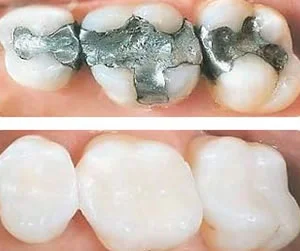
white fillings 1

Composite Fillings vs Metal Amalagram

Tooth colored fillings, also known as composite fillings, offer several benefits over amalgam fillings:

Aesthetics: Tooth colored fillings are made of a tooth-colored resin material that can be matched to the natural color of your teeth, making them virtually invisible. In contrast, amalgam fillings are silver or gray in color, which can make them more noticeable, particularly in the front teeth.

Bonding: Tooth colored fillings bond directly to the tooth structure, creating a tight seal that helps to prevent further decay. In contrast, amalgam fillings do not bond as well to the tooth structure and require the removal of healthy tooth structure to hold them in place.

Preservation of Tooth Structure: Since tooth colored fillings bond directly to the tooth structure, less healthy tooth structure needs to be removed during the preparation process. This means that more of the natural tooth can be preserved, which is important for long-term dental health.

Durability: While amalgam fillings have been used for many years and are known for their durability, tooth colored fillings have also been shown to be durable and long-lasting. With proper care, composite fillings can last for many years.

Safety: There are concerns about the safety of amalgam fillings due to the presence of mercury. While the American Dental Association maintains that amalgam fillings are safe, some individuals prefer to use alternative materials, such as tooth colored fillings.

Ultimately, the choice between tooth colored fillings and amalgam fillings depends on the individual’s preferences, the location and extent of the decay or damage, and the dentist’s recommendation. We can help you choose the best option for your needs and preferences.

white fillings contact

Replacing Metal Filling with Composite Fillings

If you’re considering replacing your amalgam fillings with composite fillings, it’s important to talk with our dentist about your options. While composite fillings offer several benefits over amalgam fillings, every individual’s situation is unique, and we can help you decide whether composite fillings are the right choice for you. With their aesthetic benefits, preservation of tooth structure, and bonding capabilities, composite fillings can provide a durable and natural-looking restoration for your teeth. Schedule a dental appointment today to discuss your options.

ADDITIONAL FREQUENTLY ASKED QUESTIONS ABOUT COMPOSITE FILLINGS

Are composite fillings safe?

Yes, composite fillings are safe and have been used by dentists for many years as a safe alternative to traditional amalgam fillings.

Do composite fillings require any special care?

Composite fillings don’t require any special care beyond regular brushing and flossing. However, it’s important to avoid biting down on hard objects or using your teeth as tools to prevent damage.

Do composite fillings look natural?

Yes, composite fillings are designed to blend in with the color of your natural teeth, making them virtually invisible.

Is there a dentist near me in Shreveport that offers composite fillings?

Yes.  At our Shreveport dental office we offer composite fillings to patients from Shreveport and the surrounding area.  Contact our office today to schedule an appointment.

Dental Crowns & Bridges

Dental Crowns & Bridges

Protect your teeth and restore your natural smile

Are you tired of hiding your smile due to missing or damaged teeth? Look no further than dental crowns and bridges! These cosmetic dental procedures offer a permanent solution to restore your smile and boost your confidence. Whether you’re dealing with decay, injury, or simply looking to enhance your appearance, dental crowns and bridges can provide a natural-looking and durable solution. Read on to learn more about how these procedures can transform your smile and improve your oral health.

WHY DO YOU NEED A DENTAL CROWN?

In the past, you may have had fillings to repair your teeth therefore you may wonder why you require an onlay or crown this time? Both of these options are an ideal way to restore teeth that have large, old restorations that can’t be repaired. Dental crowns also help to strengthen teeth after root canal therapy. These restorations are also recommended to restore a tooth that has been fractured or extensively damaged by decay in a way that a filling can’t fix.

Crowns are designed to adhere to your remaining tooth structure and cover your tooth like a cap. This allows it to encase the entire tooth, so you can eat, chew, brush, and floss with ease again.

cheerful couple

WHY DO YOU NEED A DENTAL BRIDGE?

Missing teeth look unattractive, undermine your self-confidence, and make speaking and chewing uncomfortable. A bridge is a solution for replacing one or multiple missing teeth that are adjacent. It relies on adjacent teeth as anchors for one or more prosthetic teeth in the middle. These teeth support the bridge which will restore the lost function and aesthetics.

There are benefits when choosing a dental bridge such as:
• A bridge is a fixed, long-term solution that can be a better choice for some patients than an appliance that is removable.
• A bridge prevents teeth from drifting into the empty space
• A bridge is a great alternative when we can’t utilize a dental implant.

close up before dental bridge
close up after dental bridge

What Types of Dental Bridges Are Available?

Dental crowns generally have a uniform structure, but the various types of dental bridges exhibit distinct variations in their structure. At present, four different types of dental bridges are available: traditional, cantilever, Maryland, and implant-supported. The traditional dental bridge is composed of two dental crowns utilized as anchors with a fake tooth or teeth placed in the middle, making it one of the most widely used types of dental bridges. Similarly, a cantilever bridge utilizes an anchor crown only on one adjacent tooth to the missing tooth. Due to the potential excessive strain on the anchor tooth, cantilever bridges are usually not recommended, although they may be necessary towards the back of the mouth. A Maryland dental bridge, like a traditional dental bridge, employs the same structure, but instead of dental crowns, it employs a metal framework attached to the backs of the two teeth on either side of the gap. Finally, an implant-supported dental bridge is identical in structure to a traditional bridge, but with dental implants serving as the anchor teeth.

What Types of Dental Crowns Are Available?

Although the structure of dental crowns remains consistent, the materials used to make them can vary significantly. Dental crowns are typically made from stainless steel, metal, porcelain fused to metal, all-resin, or all-ceramic/all-porcelain materials. Stainless steel crowns are commonly used in children on baby teeth or as temporary crowns, while metal crowns made from gold, platinum, or base metal alloys are a more common choice for permanent crowns. Porcelain fused to metal (PFM) crowns feature a metal base with a ceramic exterior, which provides both strength and a natural appearance. All-resin crowns are made from dental composite resin and can be color-matched to your teeth, while all-ceramic/all-porcelain crowns offer a stronger alternative to all-resin and can also be matched to the natural color of your teeth.

single dental crown

How Is a Dental Crown or Bridge Placed

Placing a dental crown or bridge requires two appointments. During the initial appointment, dental impressions will be taken, and your tooth or teeth will be prepared. Dental impressions are critical in creating a mold of your mouth that will be sent to a dental laboratory. The dental laboratory will use this information to create a custom-made dental crown or bridge. Your tooth or teeth will also need to be prepared for the placement of a crown or bridge. To accomplish this, your mouth will first be numbed to ensure your comfort. The decayed tissue is then removed, and the remaining tissue is reshaped. This process will need to be repeated for each tooth that is receiving a dental crown. Once the tooth is shaped, a temporary crown or bridge will be installed to protect the teeth while the permanent restoration is being fabricated.

Upon completion of the permanent restoration, you will return to our office for a second appointment. During this second visit, the temporary crown or bridge will be removed, and your teeth will be cleaned before placing the permanent restoration.

ADDITIONAL FREQUENTLY ASKED QUESTIONS ABOUT DENTAL CROWNS AND BRIDGES

How long do dental crowns last?

The lifespan of dental crowns varies depending on the material used, proper care, and oral hygiene. Generally, dental crowns can last between 5 to 15 years or longer.

How long do dental bridges last?

With proper care, dental bridges can last up to 10 to 15 years or more, depending on the type of bridge, the materials used, and the patient’s oral hygiene habits.

How do I care for my dental crown or bridge?

To care for your dental crown, you should brush twice a day, floss daily, use an antibacterial mouthwash, and visit your dentist regularly for cleanings and check-ups.

Are dental crowns painful to get?


Getting a dental crown typically involves some mild discomfort, but your dentist will administer local anesthesia to numb the area and make the procedure as comfortable as possible.

Can anyone get a dental crown or bridge?

Not everyone is a candidate for a dental crown or bridge. Your dentist will evaluate your oral health and determine if a dental crown is the best treatment option for you.

Is there a dentist near me in Shreveport that offers dental crowns and bridges?

Yes.  At our Shreveport dental office we offer dental crowns and bridges to patients from Shreveport and the surrounding area.  Contact our office today to schedule an appointment.